Let’s know more about yeasts and molds!
In microbiology, yeasts and molds have an important place. Although they are often associated with decomposition or infections, they also play beneficial roles in the food, pharmaceutical, and environmental industries.
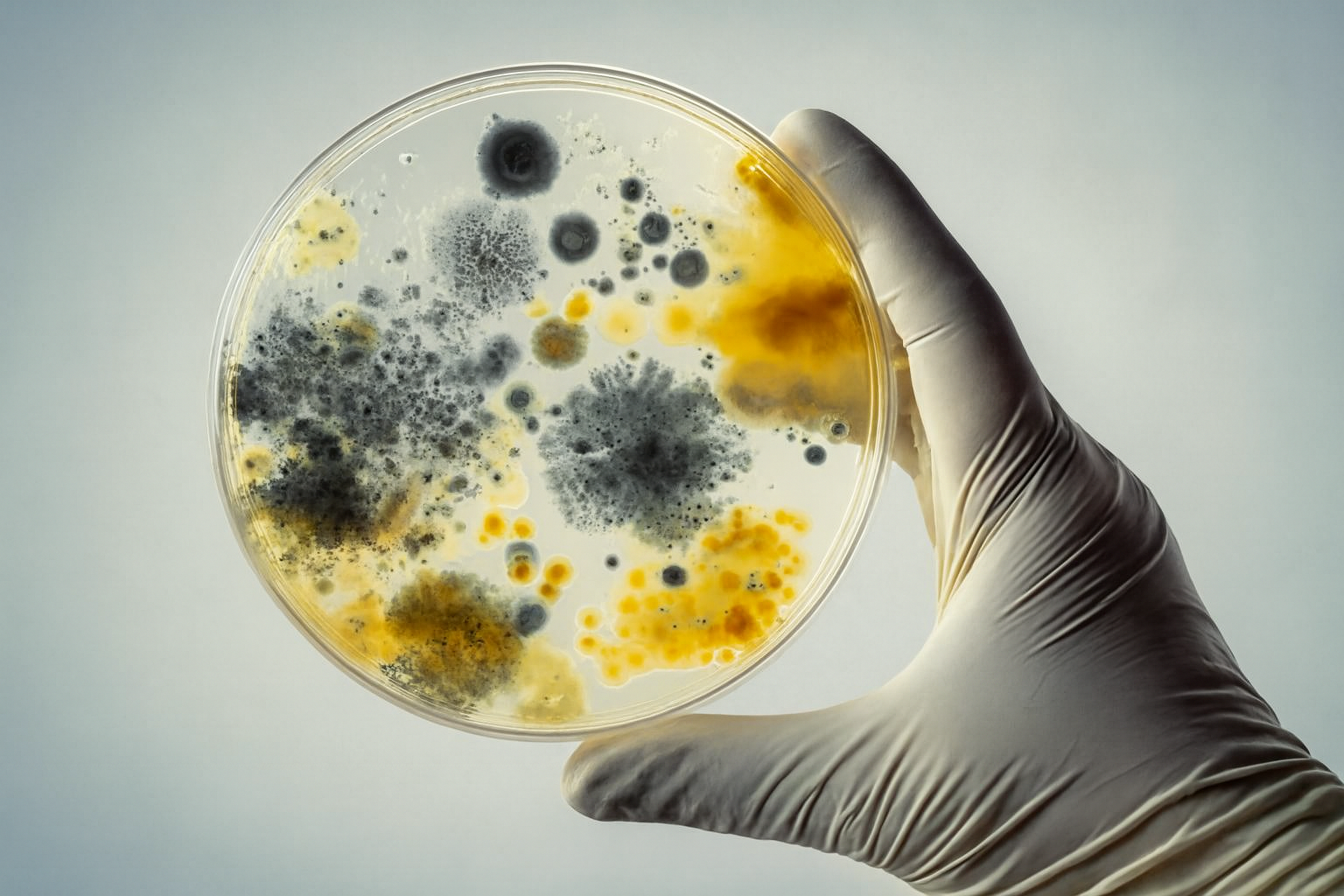
What are yeasts and molds ?
Species
Yeasts and molds are microscopic fungi belonging to the Fungi kingdom. Unlike bacteria, they are eukaryotes, meaning that their cells have a well-defined nucleus and other cellular organelles.
- Yeasts are generally unicellular. The best known, Saccharomyces cerevisiae, is used in the production of bread, beer, and wine.
- Molds, on the other hand, are multicellular and form filamentous structures called hyphae, which intertwine to form a network called mycelium. The most common are Aspergillus and Penicillium.
Cell structure
-
- Yeasts
Yeasts are composed of a single, rounded or oval cell with a rigid cell wall composed mainly of glucans, mannoproteins, and chitins. They have a nucleus containing DNA within a nuclear membrane.
-
- Molds
Molds are formed of septate or non-septate hyphae, as well as spore production (sexual or asexual), which ensure reproduction and dispersal. Finally, they have a cell wall similar to yeasts.
Metabolism
Yeasts and molds are heterotrophic, meaning they depend on organic matter for nutrition.
They mainly use fermentation or aerobic respiration to produce energy.
Yeasts such as S. cerevisiae ferment sugars to produce ethanol and CO₂, a process exploited in the food industry.
Molds are capable of breaking down complex substances using extracellular enzymes.
Related risk
Yeasts and molds have always been a part of human civilization, from the first fermented bread to the discovery of penicillin. However, they are not always beneficial. They cause problems from spoilage of food and drink, to persist infection or even deadly intoxication.
Yeast and mold are widely present in food ingredients, environment and personnel. They often lead to spoilage of food product, in both food industry and household.
Molds can produce various toxins, known as mycotoxins. The most notorious mycotoxins are aflatoxins, a group of heat-resistant, highly poisonous carcinogens and mutagens produced by Aspergillus species, notably Aspergillus flavus and Aspergillus paraciticus. These molds can cause widespread infection in grains, and whether consumed directly or ingested via animals, infected grains allow aflatoxins to enter the human body. Contaminated food and feed product can only be destroyed.
Most common pathogen yeasts are from the genus Candida and Malassezia. For example, the ubiquitous yeast Candida albican, is a commensal microorganism to healthy individual, and an opportunistic pathogen in humans under certain conditions, such as immunodeficiency, lack of competing flora after antibiotic treatment or when given access to the blood stream due to wounds and indwelling catheters. The infection can happen on skin or mucosal surface including gum, tongue, esophagus and vaginal. It can also reach deeper tissue, internal organs and even in bloodstream. In addition, some new yeast pathogens are emerging. Candidozyma auris, a rapidly spreading emerging pathogen, was first described in 2009 and has been involved in several breakouts of antimicrobial-resistant infections. It is now responsible for 700,000 deaths per year worldwide.
Different from many foodborne pathogens, yeasts and molds do not always trigger acute food poisoning or intestinal infection. However, the control and monitoring of all yeasts and molds in food industry remains crucial – not only to prevent spoilage of products and related economic losses, but also to reduce human exposition to potential pathogens.
What are the symptoms and complications?
Symptoms appear 30 minutes to 8 hours after ingestion. Nausea followed by vomiting are the most characteristic; other symptoms include abdominal pain, diarrhea, dizziness, chills and general weakness, sometimes accompanied by a moderate fever. Toxic shock, although rare, can be fatal.
Laboratory detection methods
Compliance with standards is essential to ensure food safety. The counting of yeasts and molds relies on standards ISO 21527-1:2008 and ISO 21527-2:2008. These standards are based on a horizontal method for counting viable yeast and mold in food products. The technique involves counting colonies incubated at 25 ± 1 °C on DRBC or DG18, 2 classic culture media for yeasts and molds.
Other classic media for yeast and mold are :

Biokar Diagnostics has also developed an alternative method, SYMPHONY Agar®, for the enumeration of yeasts and molds. The method is a certified NF VALIDATION, according to the ISO 16140-2:2016 protocol, for all food and animal feed products and environmental samps, regardless of their water activity.
It allows enumeration after only 54 hours of incubation, compared to a minimum of 5 days for standardized methods. The method is simple to use, allowing an easy reading of yeasts and molds colonies.
Moreover, it can be used for air quality control and water analysis by membrane filtration.
Implications for public health and food safety
Symptoms in case of ingestion
Symptoms vary depending on the toxin, dose, and duration of exposure. They can be acute, such as nausea, vomiting, abdominal pain, and diarrhea.
In extreme cases, outbreaks of mycotoxicosis have been observed, particularly in countries with weak controls.
Beyond acute food poisoning, long-term risks such as infections, genetic mutations, and toxin-related cancers are as dangerous and should not be ignored.
Prevention and control
Good hygiene practices are essential to combat contamination in industry, including:
- humidity control
- thorough cleaning of surfaces
- control of the cold chain
- stock rotation to avoid accumulation
- immediate detection and elimination of moldy products
These measures are the best way to deal with fungal contamination.
Conclusion
Yeasts and molds occupy an essential place in microbiology due to their ubiquity in the environment, their metabolic diversity, and their varied impacts on ecosystems, industry, and human health. Better understanding them means better understanding their roles and learning how to make use of them, while also preventing the risks associated with their pathogenic forms.